
What a freedom-to-operate search can and cannot tell you
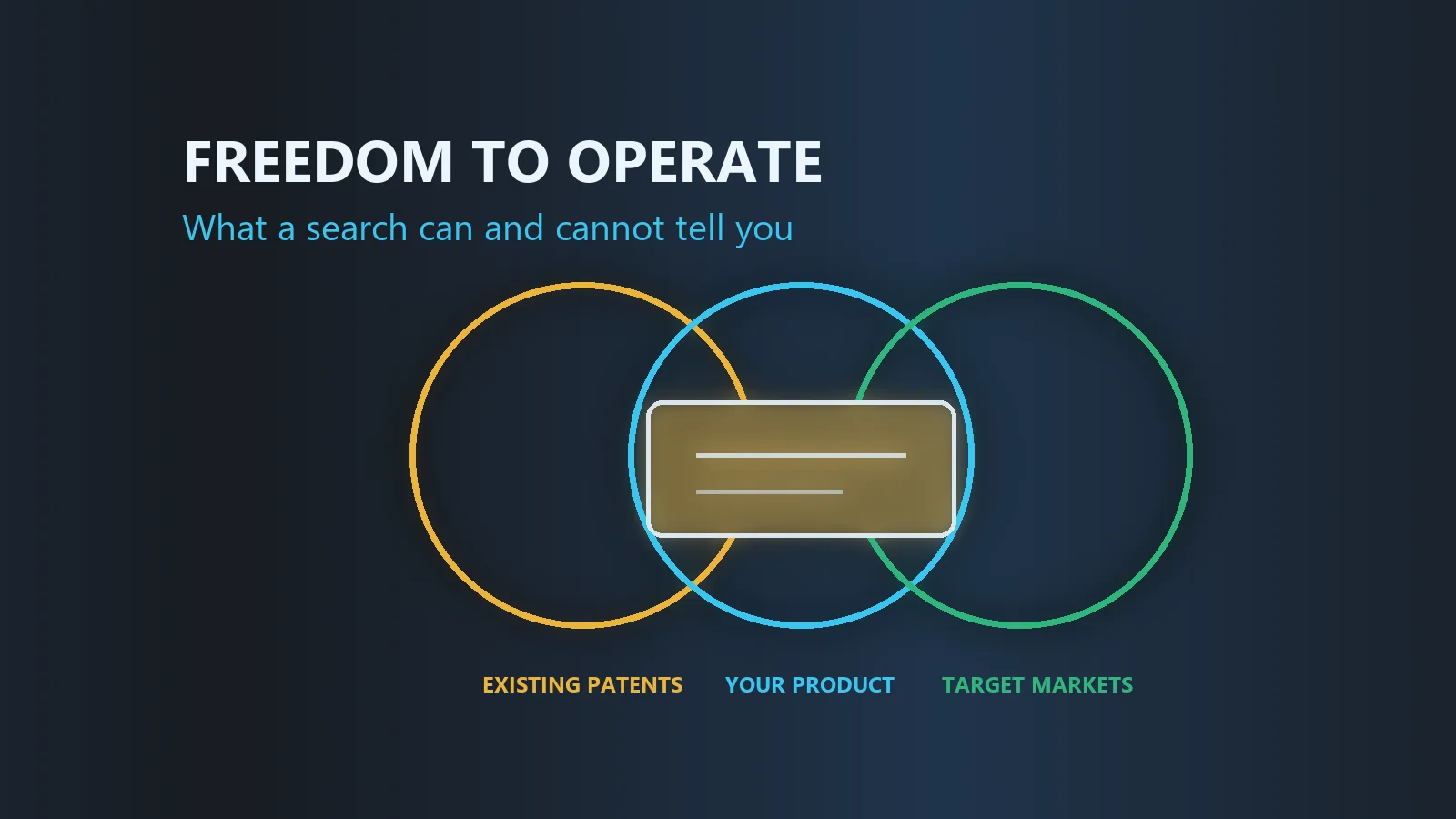
A patent on your own improvement does not give you the right to sell the whole product. Other people may hold patents on other features, components or combinations. A freedom-to-operate (FTO) search looks at that question before you launch.
How it differs from a patentability search
A patentability search focuses on what is unique in your invention and whether it looks new. An FTO search covers every feature and combination in the product you sell, in the countries where you sell it. Neither replaces the other.
What the results look like
- A set of patents that may be relevant to the product and the target markets
- A comparison of their claims against the features of your product
- Observations and recommendations on which ones matter and why
If the search finds overlap
- Redesign the product so at least one claim limitation is absent, supported by a legal opinion
- Negotiate a licence with the patent owner before launch
- Cross-license, where you hold overlapping patents of your own
Limits to keep in mind
- No search can be exhaustive, and results depend on the quality of the product description you provide.
- Patents are national, so the result applies to the countries searched.
- Applications are generally published about 18 months after filing, so very recent filings may not yet be visible.
- A search is a snapshot in time: it should be refreshed as the product and the patent landscape change.
A full freedom-to-operate opinion is a distinct, scoped piece of legal work. A search tells you where to look; an opinion applies the law to your product.
General information only. Not legal advice, and no attorney–client relationship is created by reading this article.