
Provisional or complete? Choosing your first US filing
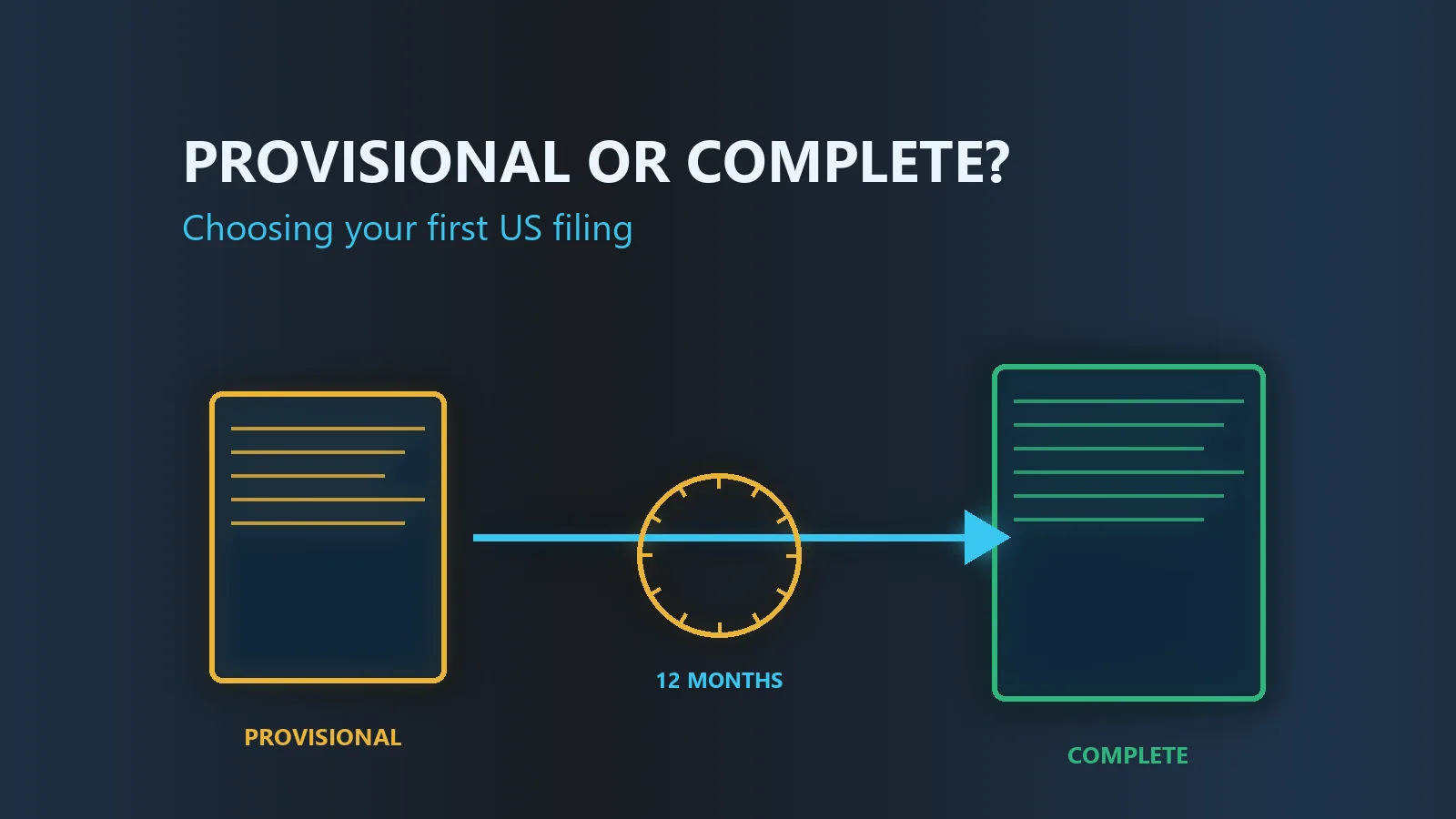
Founders often ask which kind of US application to file first. The honest answer is that they do different jobs, and the right choice depends on how developed the invention is, how soon something will become public and what the budget allows.
What a provisional gives you
- A filing date for what the application adequately describes
- Twelve months to file a complete (non-provisional) application that can claim that date
- Lower cost and less formality than a complete application
- The ability to say “patent pending” once it is on file
What it does not do
A provisional is never examined and never becomes a patent by itself. If you do not follow it with a complete application within twelve months, it simply expires. Its value also depends on its content: a thin description protects only what it actually describes, so a rushed provisional can leave later claims without support.
When a complete application makes sense
- The invention is well developed and the details are stable
- You want examination to start sooner
- You have already made a public disclosure and want to move straight to the main filing
A common path
- File a detailed provisional before the first talk, demo or launch.
- Keep building, testing and talking to investors with a date secured.
- Within twelve months, file the complete application, and decide at the same time about filing in other countries through the Paris Convention or the PCT.
If you are unsure which route fits, the self-check on this site is a good first step, and a consultation can help you choose.
General information only. Not legal advice, and no attorney–client relationship is created by reading this article.