
Getting your IP ready for a seed round
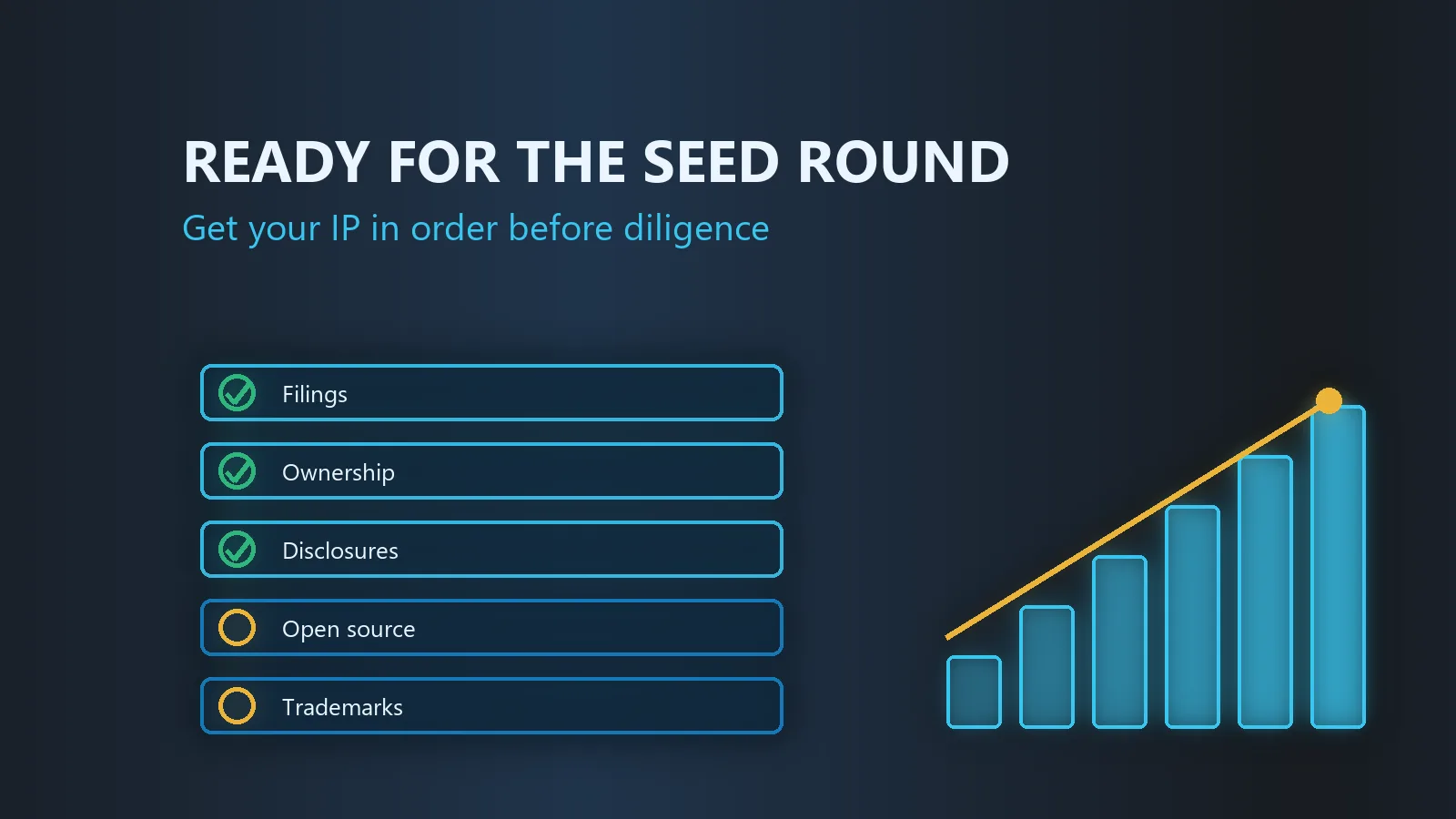
Diligence teams routinely ask the same IP questions. The cheapest time to find gaps is before they do, and most of the work is organisation rather than new filings.
1. Know what you have filed
Keep one list of every application, with dates, jurisdictions, status and upcoming deadlines. Include provisionals, and note when each twelve-month window ends.
2. Prove ownership
- Employees and contractors should have signed agreements assigning their inventions to the company.
- If a university, former employer or accelerator may have a claim, resolve it in writing.
- Assignments should be recorded with the patent office so the chain of title is clear.
3. Map your disclosures
List every talk, paper, demo, repository and pitch where the technology was shown, with dates. Public disclosure can affect rights, particularly outside the United States, and investors will want to understand it.
4. Review open source
Know which open-source components you use and under which licences, and which parts of your own code are public.
5. Check your trademarks
Confirm that the company name and product names are cleared and, where it matters, registered in the markets you serve.
6. Tell one consistent story
Be ready to explain what is protected, what is a trade secret, what is still to be filed and why. A short, honest summary reads better than a long list.
If you are preparing for a round, a consultation can help you prioritise what to fix first.
General information only. Not legal advice, and no attorney–client relationship is created by reading this article.