File before you publish: how early disclosure can cost you patent rights
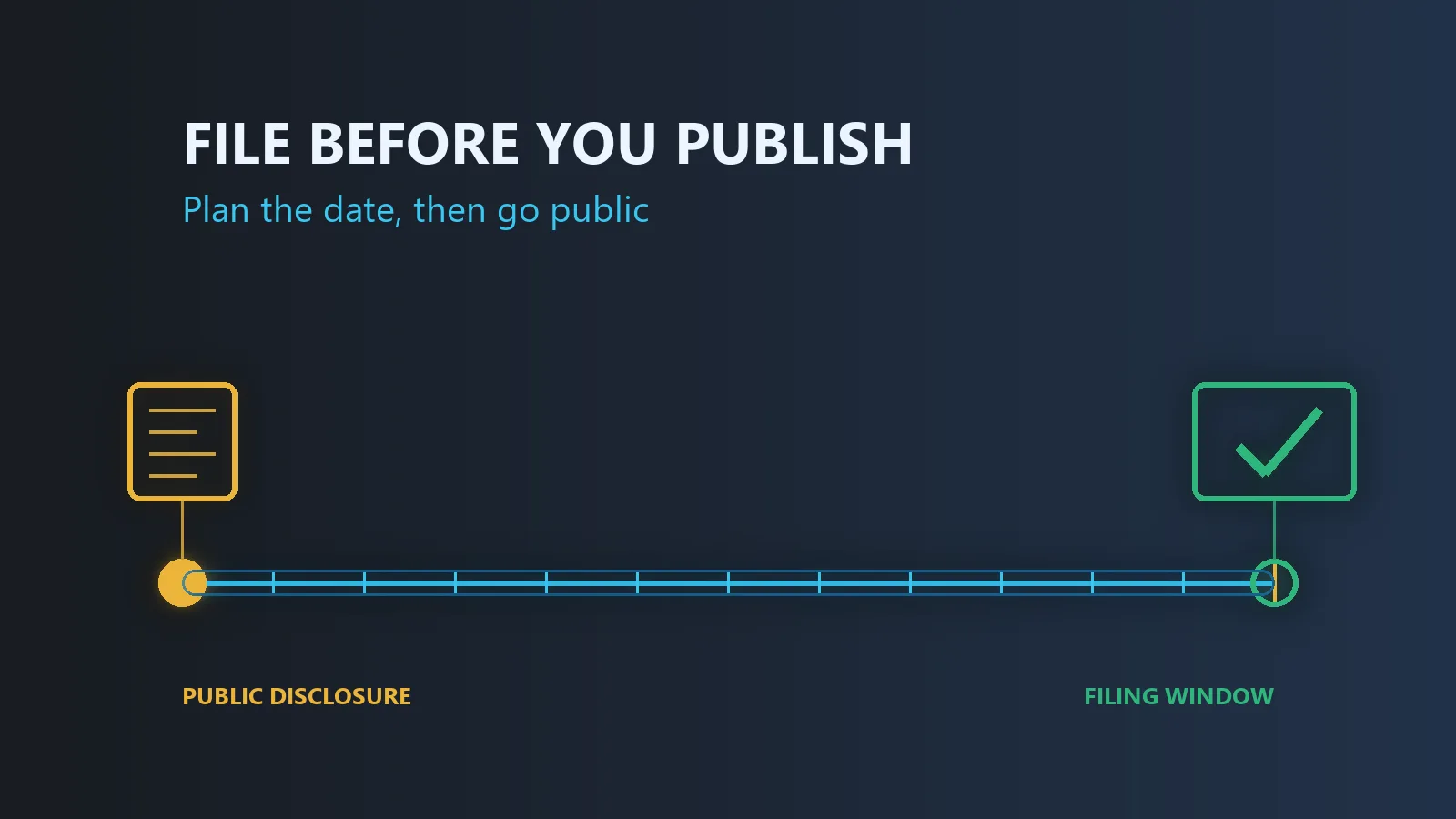
Founders often tell the story of a new technology before anyone has thought about protecting it: a conference talk, a demo, a paper, an open-source release or a launch post. Each of these can affect patent rights, and the effect can be permanent. A short conversation before you go public is usually the cheapest protection there is.
What counts as public?
- A talk, poster or paper, including preprints
- A product demo to an audience not bound by confidentiality
- An open-source release or a public code repository
- Website, blog or social posts that explain how the technology works
- Pitch decks shared without a confidentiality agreement
- Offers to sell, and first sales, of a product that uses the invention
The US grace period, and why not to lean on it
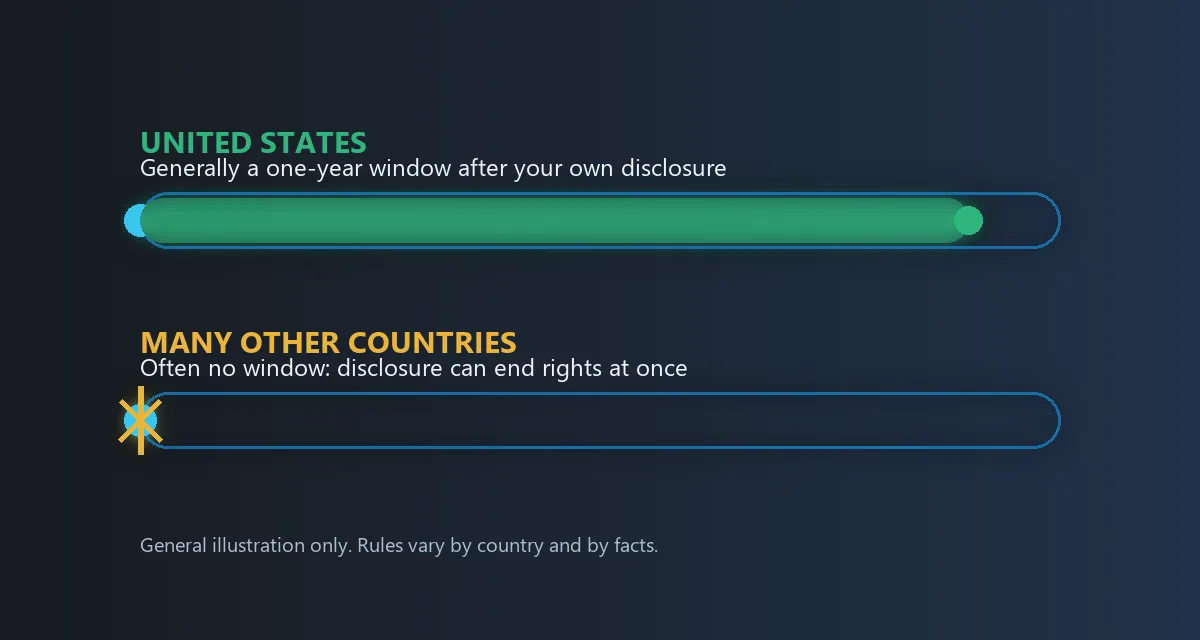
In the United States there is generally a one-year window after your own public disclosure in which you can still file a patent application. Many other countries have no equivalent: if the invention is public before the filing date, it may no longer count as new. That means a disclosure that is recoverable in the US can still cost you rights abroad.
The details depend on the facts and on each country’s rules, which is exactly why timing is worth a conversation before the event rather than after it.
A practical checklist
- Write down what is new about your approach, in plain words.
- Before any talk, paper, demo or launch, list what it will reveal.
- Talk to a patent professional while there is still time to choose a filing date.
- Consider a provisional application to secure an early date on the core of the invention.
- Use confidentiality agreements when sharing details with partners and investors.
- Keep a dated record of every disclosure, however informal.
If you are planning a launch or a paper, the self-check on this site is a good first step, and a consultation can help you choose a sensible filing date.
General information only. Not legal advice, and no attorney–client relationship is created by reading this article.